Transforming an AI-Powered Governance, Risk & Compliance Platform
A complete, ground-up redesign of Workiva’s legacy SOX audit testing system—transforming a fragmented set of tools into a cohesive, end-to-end workflow. I led the evidence management experience from discovery through final execution, redefining how auditors gather, organize, validate, and apply evidence throughout testing. The result was a unified, intuitive experience that modernized the platform and reduced friction across the entire testing lifecycle.
12 months
3 UX Designers
3 PMs
1 UX Researcher
20+ Engineering team
Audit SMEs
Finance reporting & Compliance software
Projected to reduce onboarding from weeks to minutes based on beta test performance.
Achieved 80–95% task success in beta usability testing across core evidence workflows.
AI-assisted sample generation tested extremely well, with participants rating it close to 5/5 for usefulness and clarity.
Consolidated fragmented legacy workflows into a single end-to-end SOX testing system.
Challenge
The legacy audit system had fragmented, outdated workflows that made it hard for testers to even begin their work. Users often needed customer support just to get onboarded, and the inconsistent UI left many unsure of where to go or how to use key features. Heavy customization added even more complexity and unpredictability across accounts. Evidence files were especially difficult to manage—scattered throughout the project, hard to view or locate, and lacking unified request system. Testers needed clear way to gather, organize, or use evidence efficiently during testing.
My contributions
As the lead designer for the Evidence pillar, I drove the end-to-end design of Audit evidence management experience—including evidence collection, requests, organization, and in-test validation & usage.
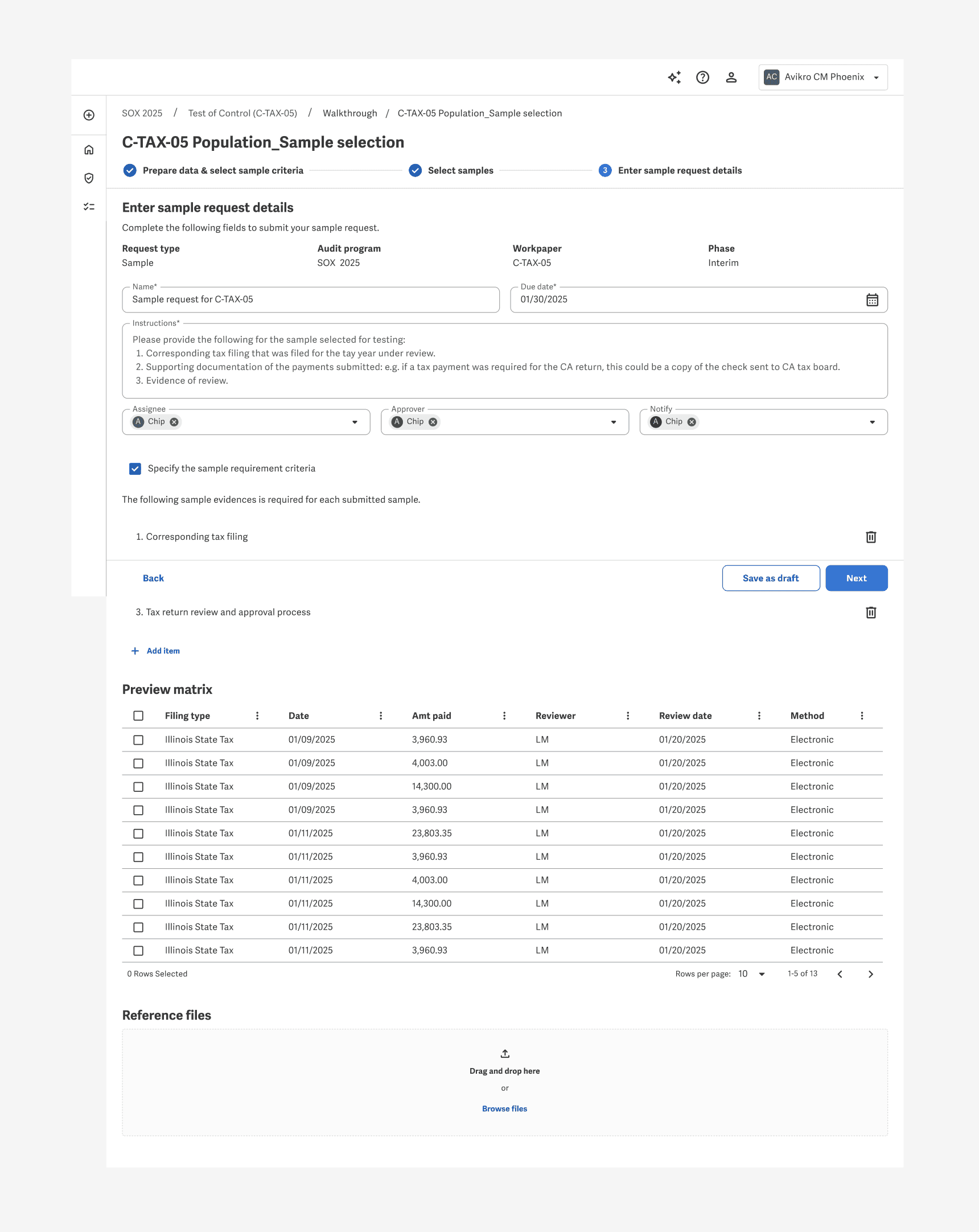
Data setup workflows (population & sample creation, automated sampling)
Evidence intake flows (requests, uploads, validation)
System-level IA and navigation redesign
Cross-system UI modernization and pattern alignment
Reduced onboarding friction and improved initial usability
Unified end-to-end user journey across testing
Results
The redesign introduced a unified, intuitive workflow that eliminated fragmentation and greatly reduced onboarding friction.
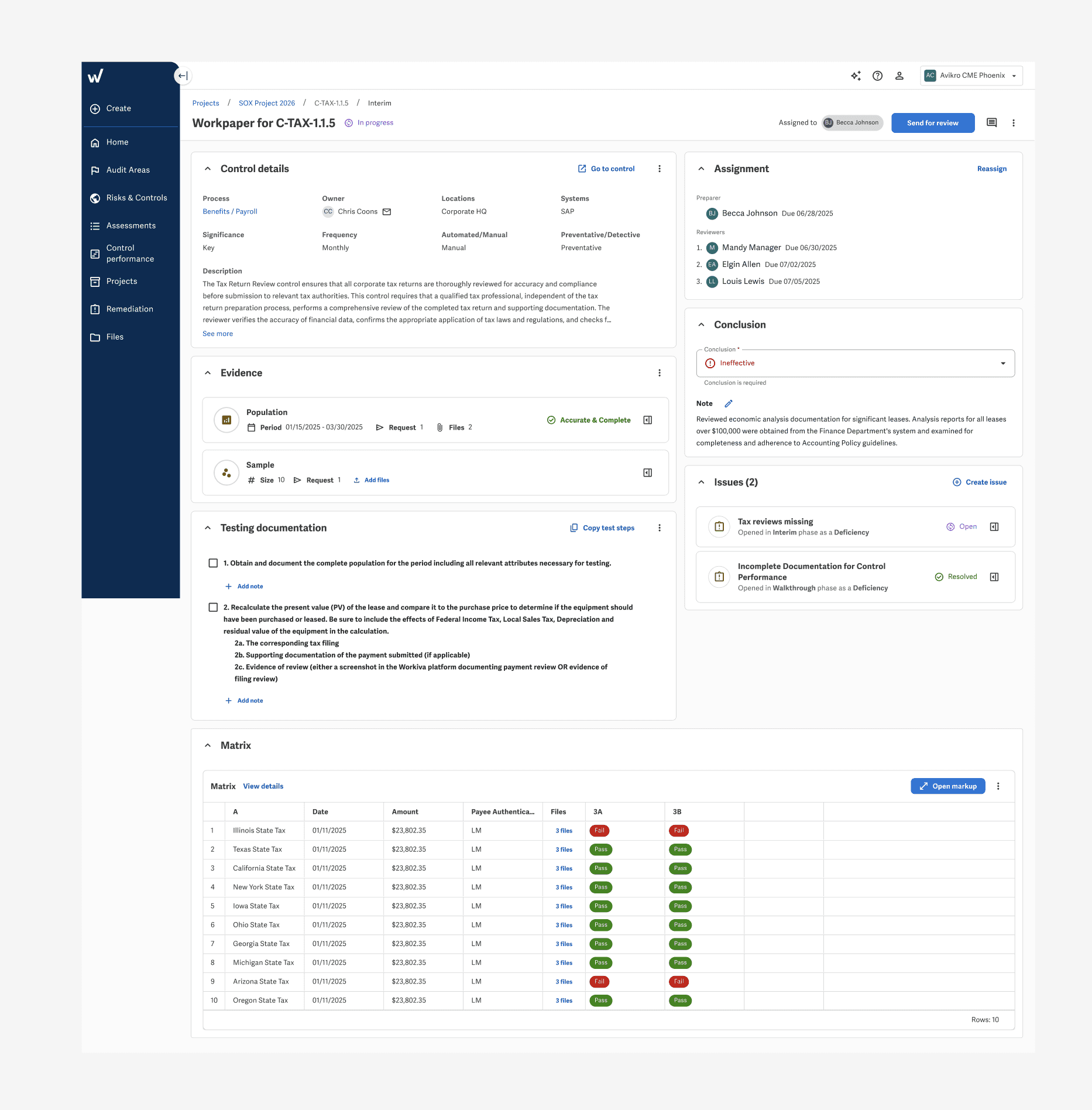
A centralized evidence management experience allowed users to collect, view, organize, and apply evidence in one place, with clear request flows that streamlined collaboration. The new system improved clarity, reduced dependency on customer success, cut time spent locating evidence, and enabled testers to move through their work with far greater confidence and efficiency.
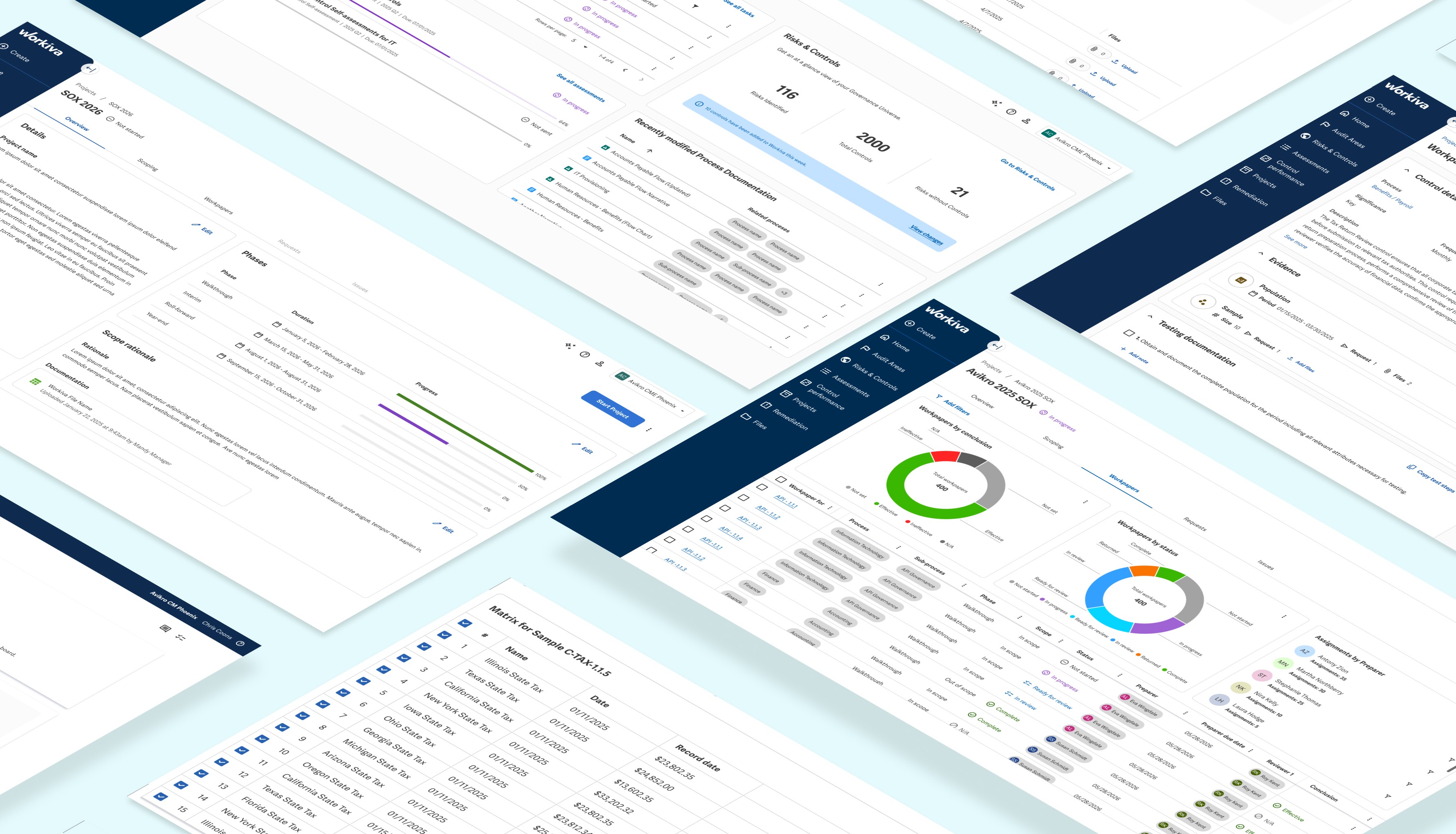
A Glimpse into the Evidence Collection & Management Experience
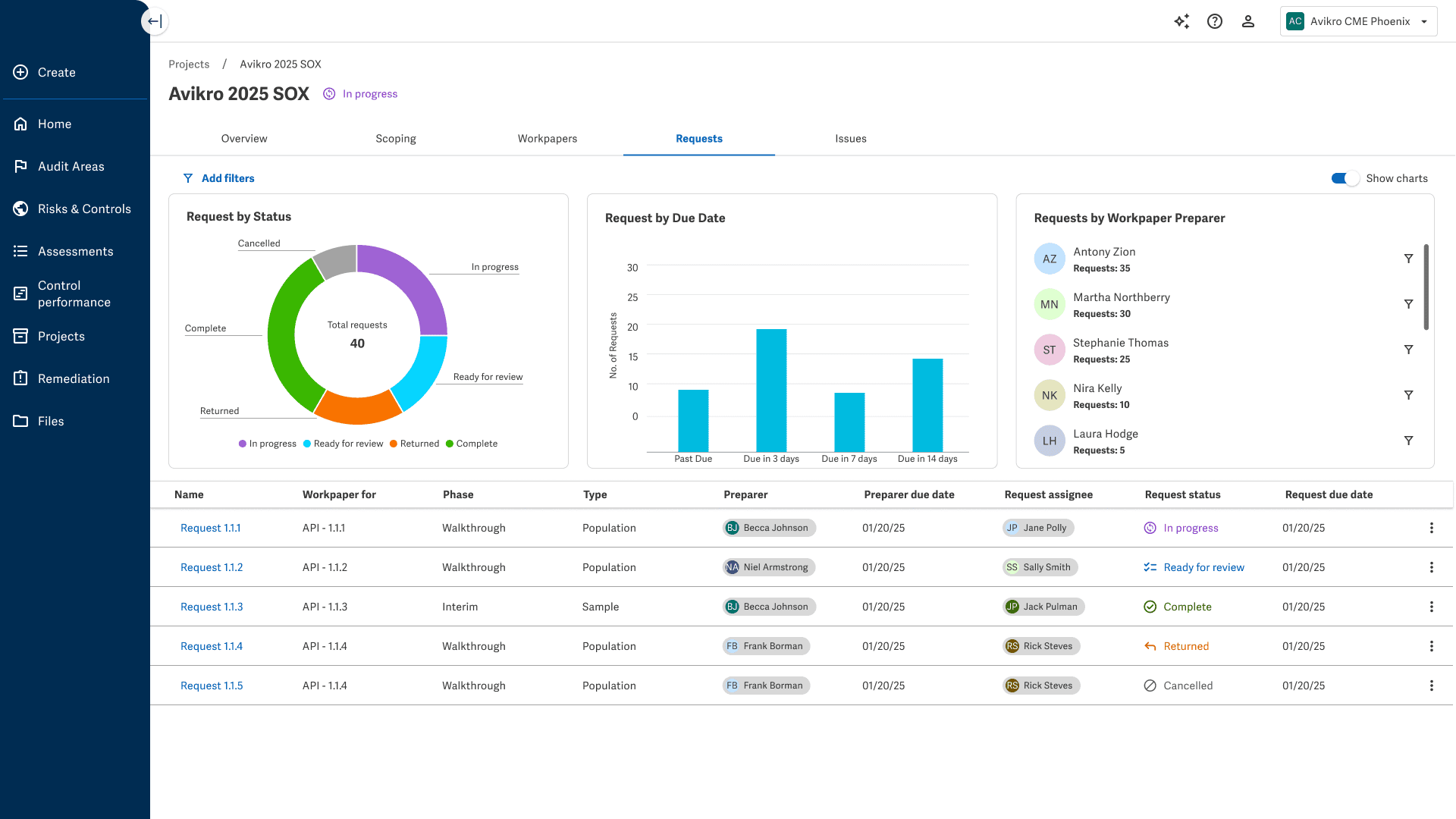
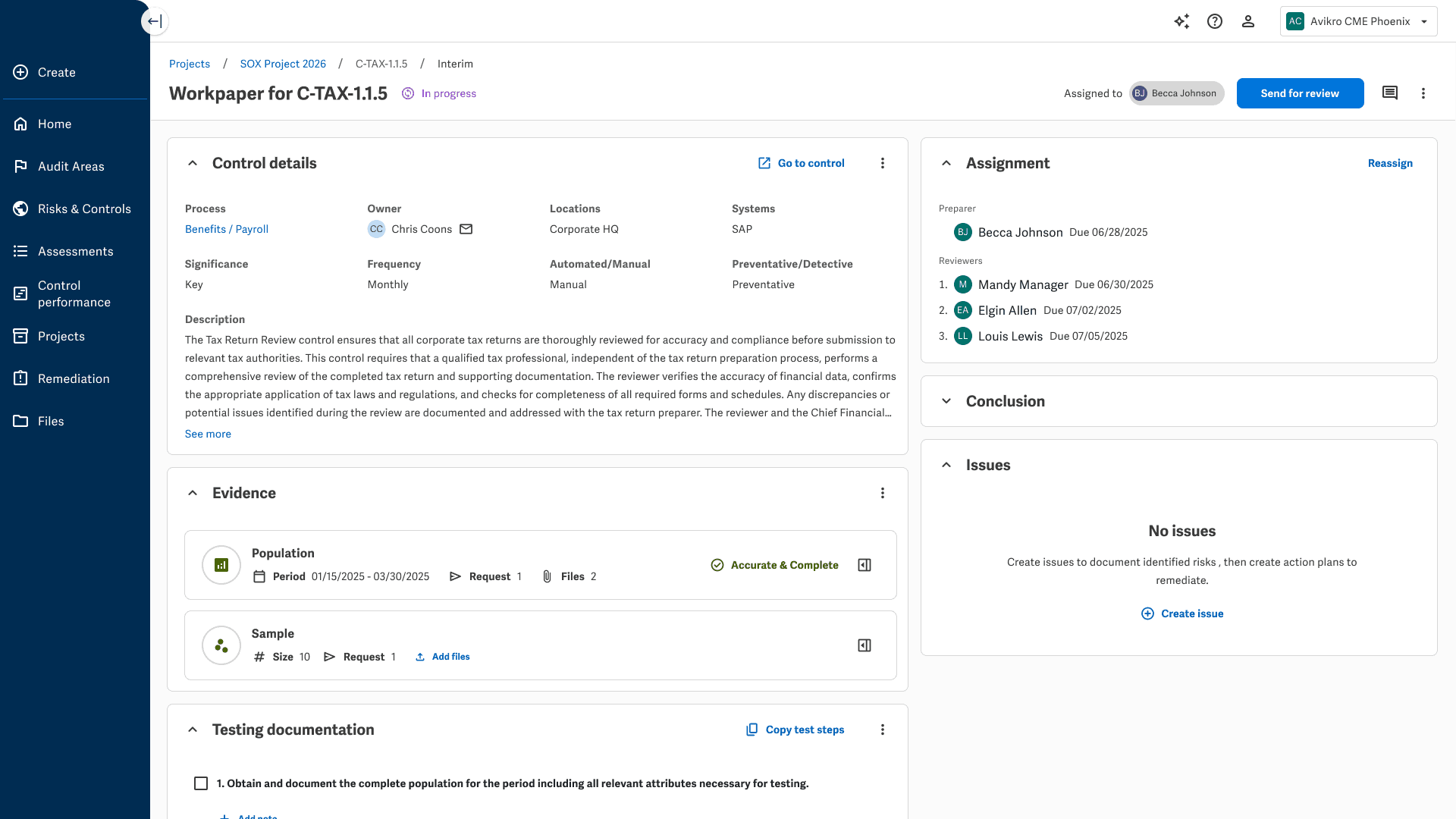
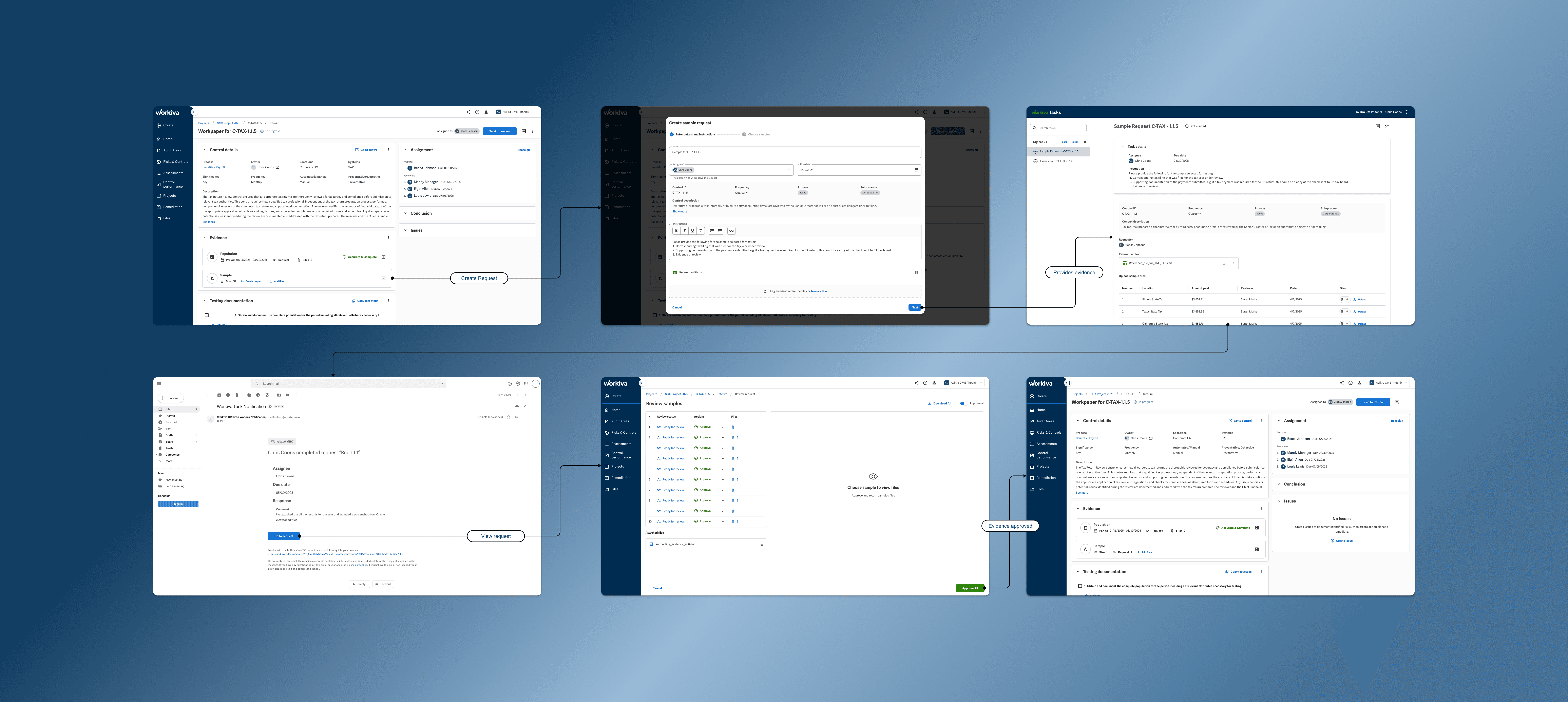
Leading designs for the Evidence Pillar
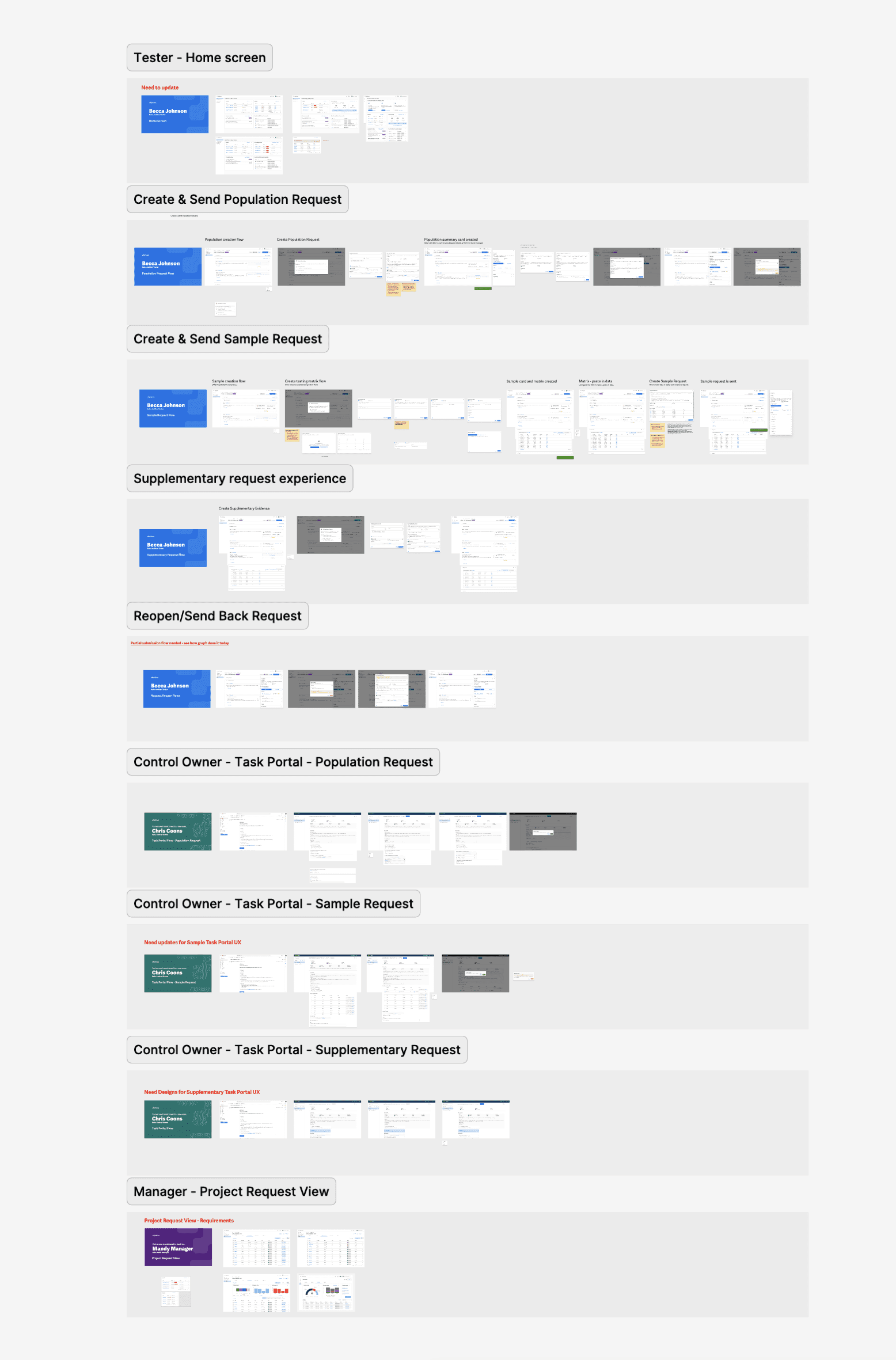
As the lead designer for the Evidence Pillar, I owned and designed the entire evidence management ecosystem from the ground up. This included defining and delivering the full end-to-end evidence experience — evidence collection, requests, organization, and in-test use — as well as the supporting data setup workflows such as population creation and automated sampling. I led the design of evidence intake flows (requests, uploads, validation), drove the system-level information architecture and navigation redesign, and modernized the UI patterns across interconnected testing experiences to align with a unified design system.
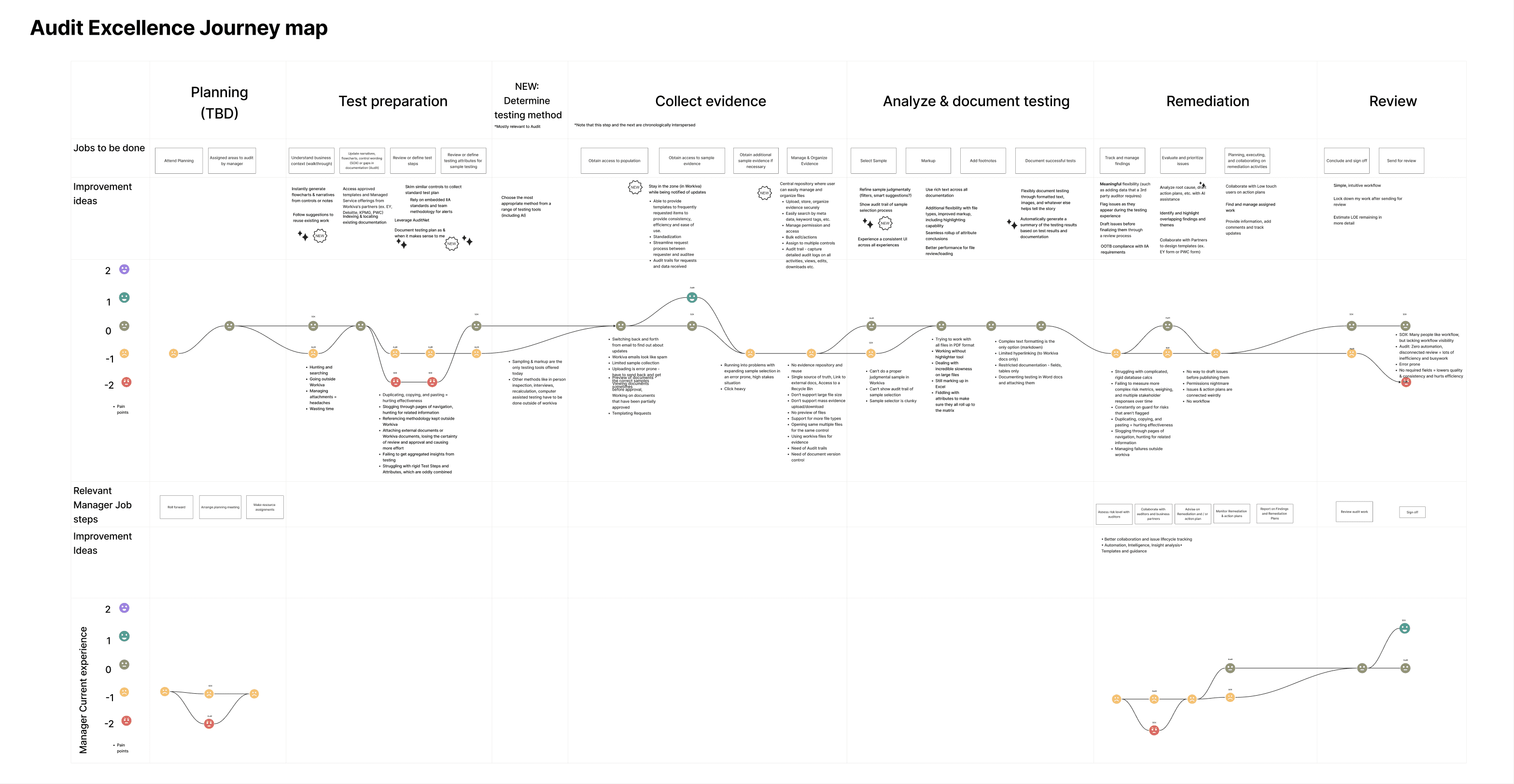
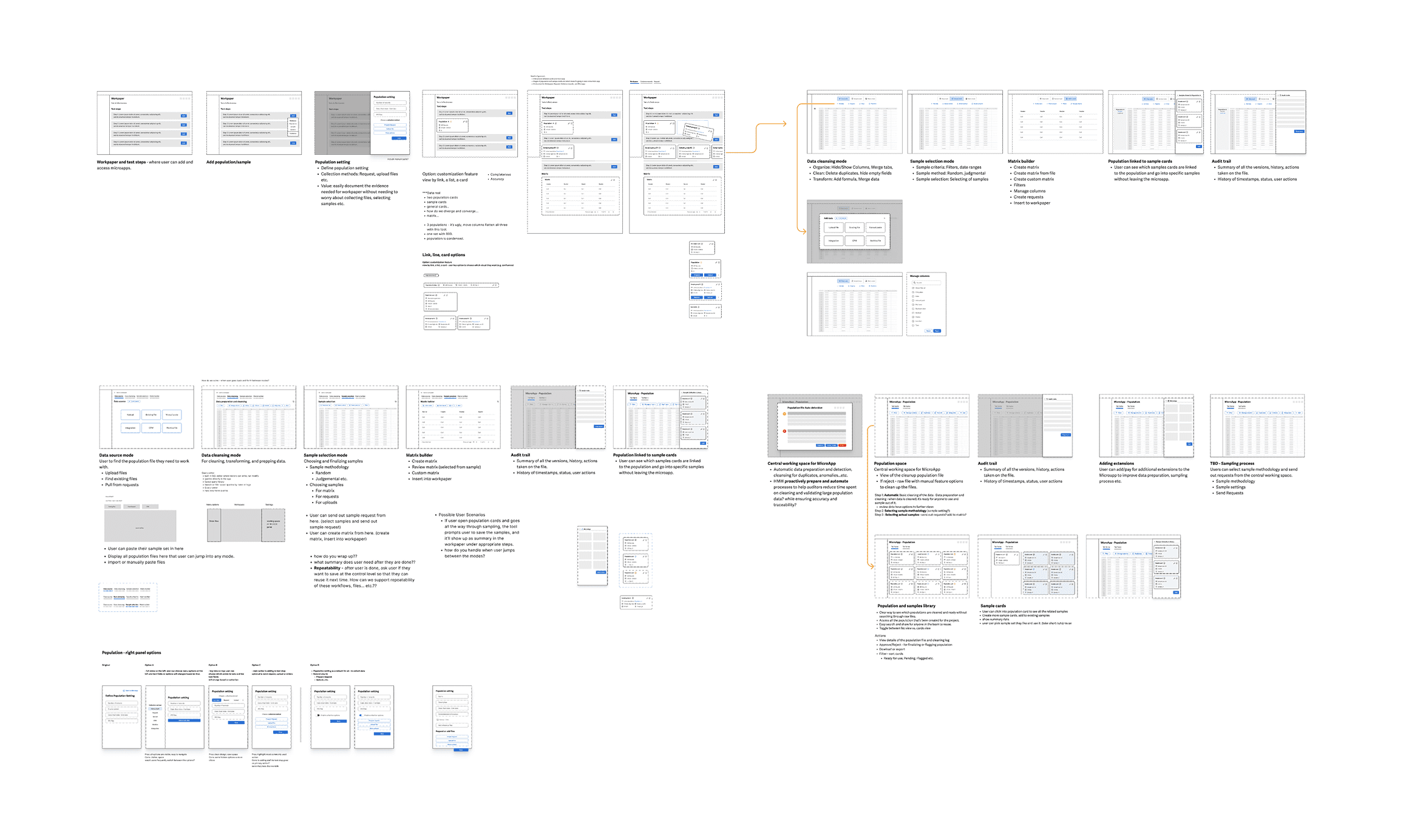
Audit tester's end to end user journey & concept developments
Understanding Core Jobs to be Done
When this project began, we were starting from a true 0→1 state — To ensure the new platform was grounded in real auditor behaviors and operational needs, we initiated a comprehensive discovery phase focused on deeply understanding the end-to-end audit testing and evidence lifecycle.
We partnered with eight core customer organizations, ranging from mid-sized to global enterprises, and conducted a series of in-depth research activities:
One-on-one interviews with managers, auditors/testers, and business users
Workflow observations to capture real behaviors, tools used, handoffs, and friction points
Task analysis to uncover the critical steps required to complete population creation, sampling, evidence gathering, and testing
Contextual inquiry within their audit environments to see how evidence was collected, organized, validated, and reused
Through this research, we synthesized the team’s findings into:
1. Core Jobs-to-be-Done
We identified the essential goals each persona needs to achieve during the evidence lifecycle — from preparing a population set, to sampling, requesting evidence, reviewing submissions, and performing the final test.
2. End-to-End User Journey Map
The user journey map revealed the core tasks, pain points, key decision points, and the critical dependencies and handoffs in the tester workflow, highlighting clear opportunities for consolidation, automation, and simplification.
These insights became the foundation for the product strategy and design direction. They clarified what problems truly mattered, where the highest friction existed, and how we could design a cohesive, efficient evidence management experience that drastically improved user confidence, accuracy, and workflow speed.
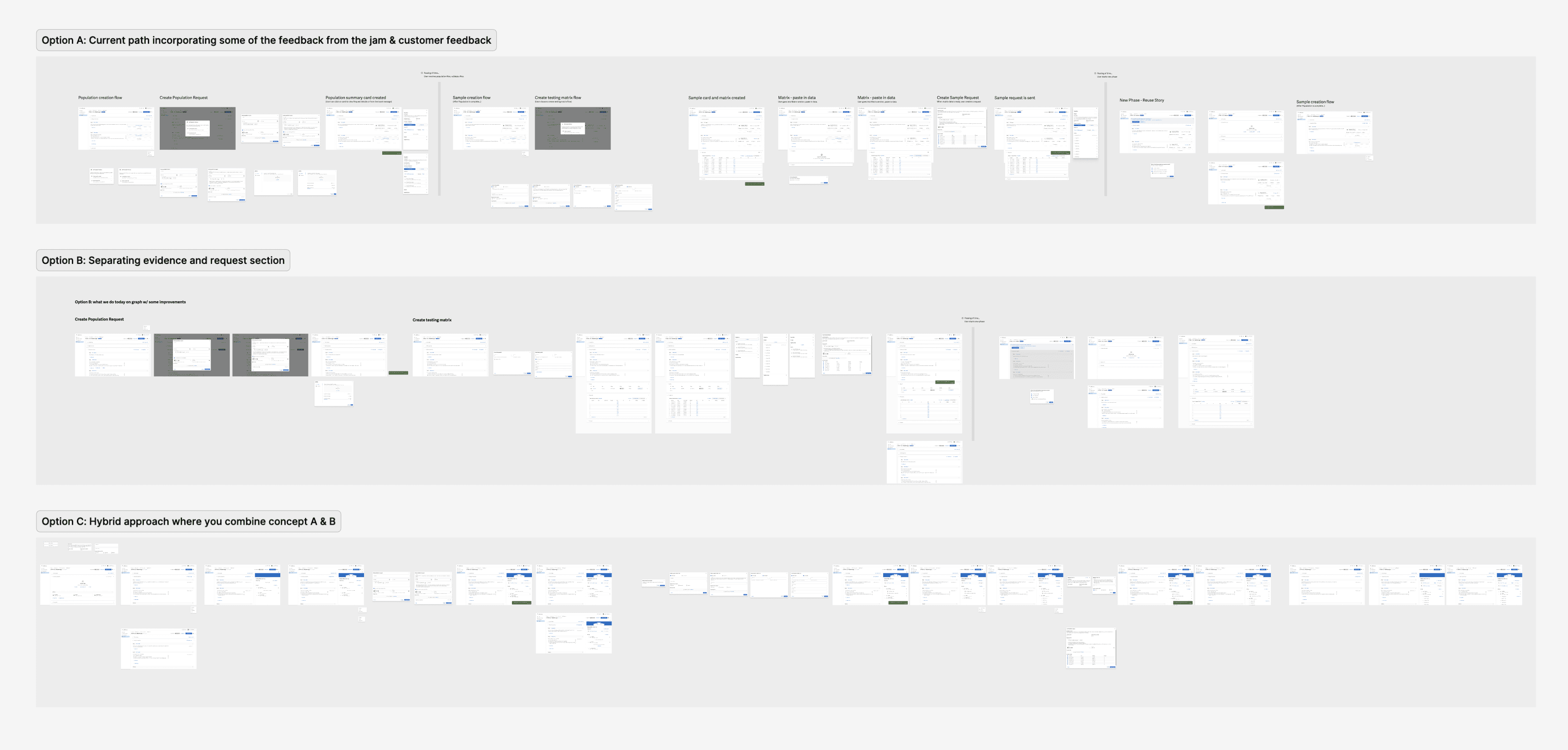
Concept testing & validation examples
Research driven design process
Throughout the project, I led a highly iterative, research-based design process to ensure the final experience was not only strategically aligned but also usable, intuitive, and grounded in real auditor behavior.
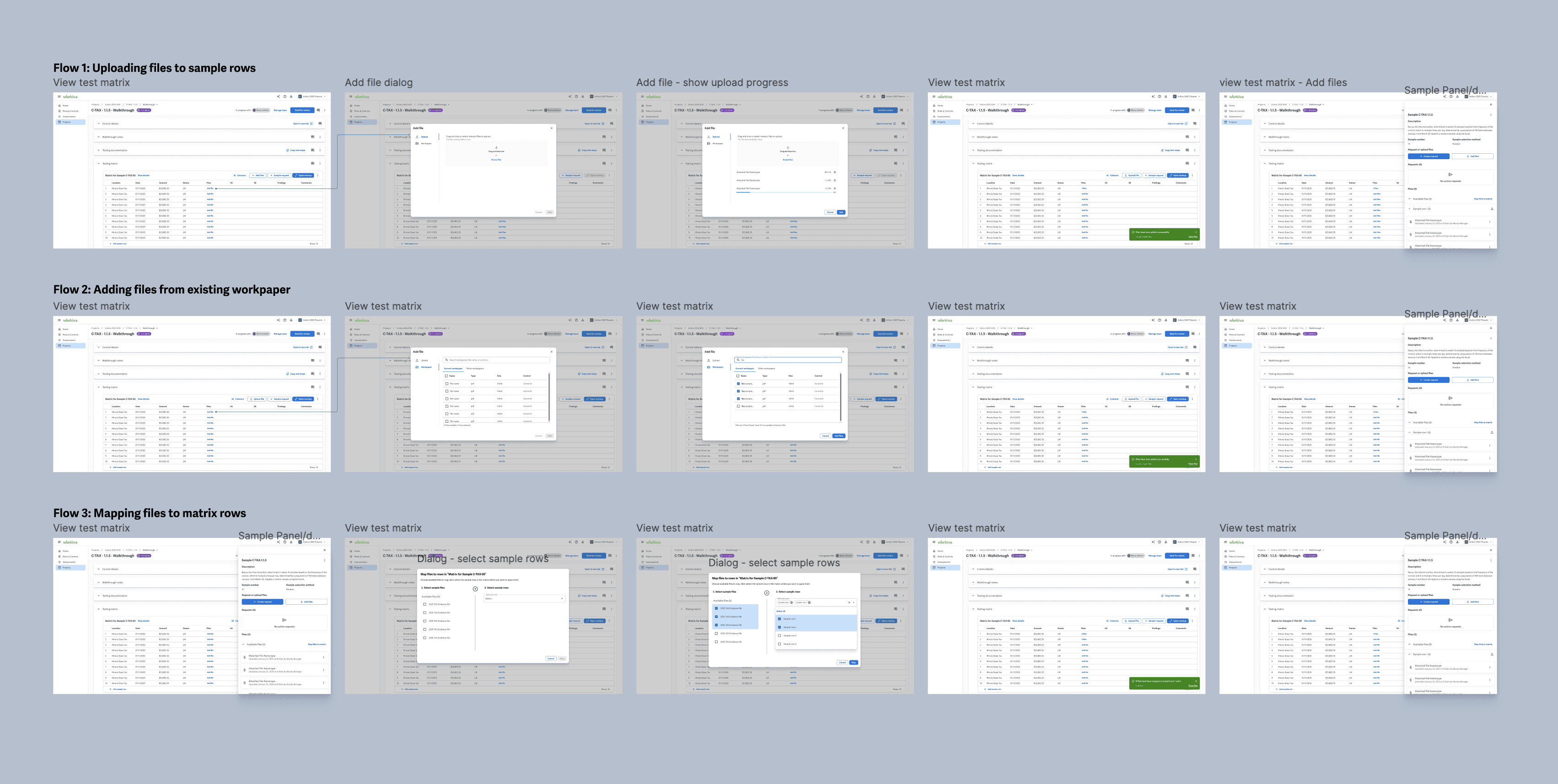
After completing the initial discovery phase, I lead user sessions gather feedback on concept exploration, where I created multiple workflow models, early prototypes, and interaction concepts for key parts of the evidence lifecycle. These concepts were then tested with users in targeted concept validation sessions, allowing us to quickly evaluate directionality — what users understood, what felt intuitive, and where new patterns introduced friction.
As designs matured, I conducted flow-based usability testing using higher-fidelity interactive prototypes.
Conclusion
This project went through many rounds of discovery, concepting, and usability testing before we landed on the final workflows. I partnered closely with PMs, engineering leads, audit SMEs, and research to shape the direction at every step. My role wasn’t just designing screens—I helped the team align on the problem, validate ideas with users, and turn ambiguous requirements into a clear, scalable experience. The final solution reflects that iterative process and the strong cross-functional collaboration behind it.