Transforming Refinery Operations Through AI-Powered Decision Support
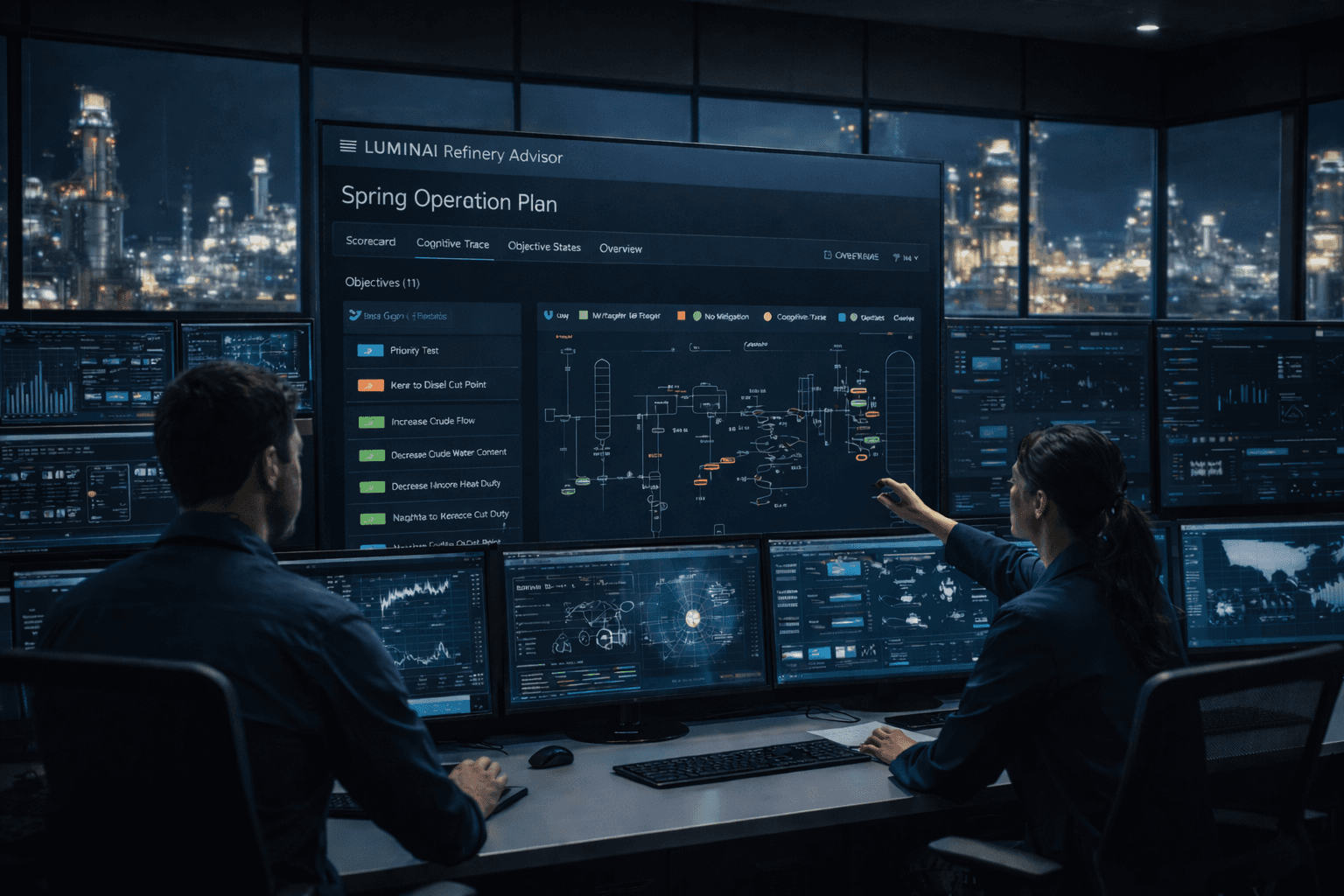
Beyond Limits - AI Startup
Lead UX Researcher
Lead Product Designer
2020-2021
Enterprise B2B Saas
AI Powered Operations
17% improvement in hitting operational targets
1-month fastest adoption time
500+ users successfully onboarded at the site
200+ complex objectives digitized and automated
Challenge
Shift managers in oil refineries face immense pressure to meet operational targets while making split-second decisions in complex, high-stakes environments. When I joined Beyond Limits, our goal was to modernize refinery operations by transitioning from manual surveillance to automated, real-time monitoring.
The core problem: How might we help shift managers like Sam make confident, consistent decisions across their 12-hour shifts when refinery conditions are constantly changing?
My Role & Approach
As the lead designer, I:
Led end-to-end UX research including on-site observations and interviews
Developed user personas and journey maps
Designed the complete E2E product experience from planning to operations
Collaborated with engineering and stakeholders throughout development
Built and hired the design team
My design philosophy: I believe great enterprise software starts with deep user understanding. I spent time in actual refineries, observing shift managers in their environment, to design solutions grounded in reality.
17%
Improvement in hitting operation targets
1-month
User adoption time which is fastest adoption in the industry
200+
Complex game plans digitized and automated
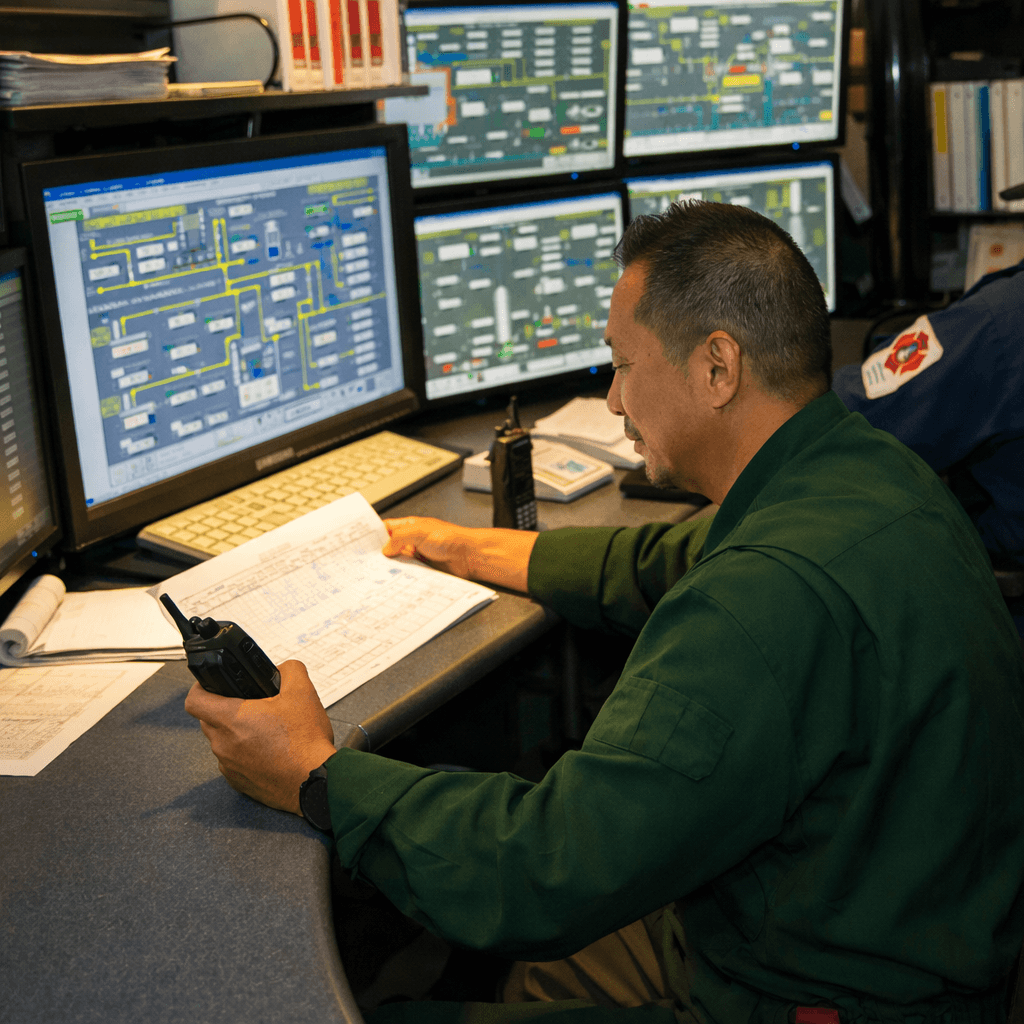

Understanding Sam: The Shift Manager
Through our research, I met Sam—a seasoned shift manager with 15-20 years of experience. Sam's biggest challenges:
"I need clear direction on what to do and the reason I have to do it."
Sam's Pain Points:
Overwhelming complexity: Managing 200+ objectives across multiple units simultaneously
Information overload: Reviewing 17-page game plan documents while monitoring live operations
Inconsistent guidance: Different engineers provide conflicting priorities across shifts
Time pressure: No time to search through documentation when issues arise
Dependency on engineers: Technical issues require engineer intervention, causing delays
What success looks like for Sam:
Quick visual understanding of current performance vs. targets
Clear priorities: what needs attention NOW
Actionable guidance: not just what's wrong, but what to do about it
Confidence to make decisions without always calling engineers
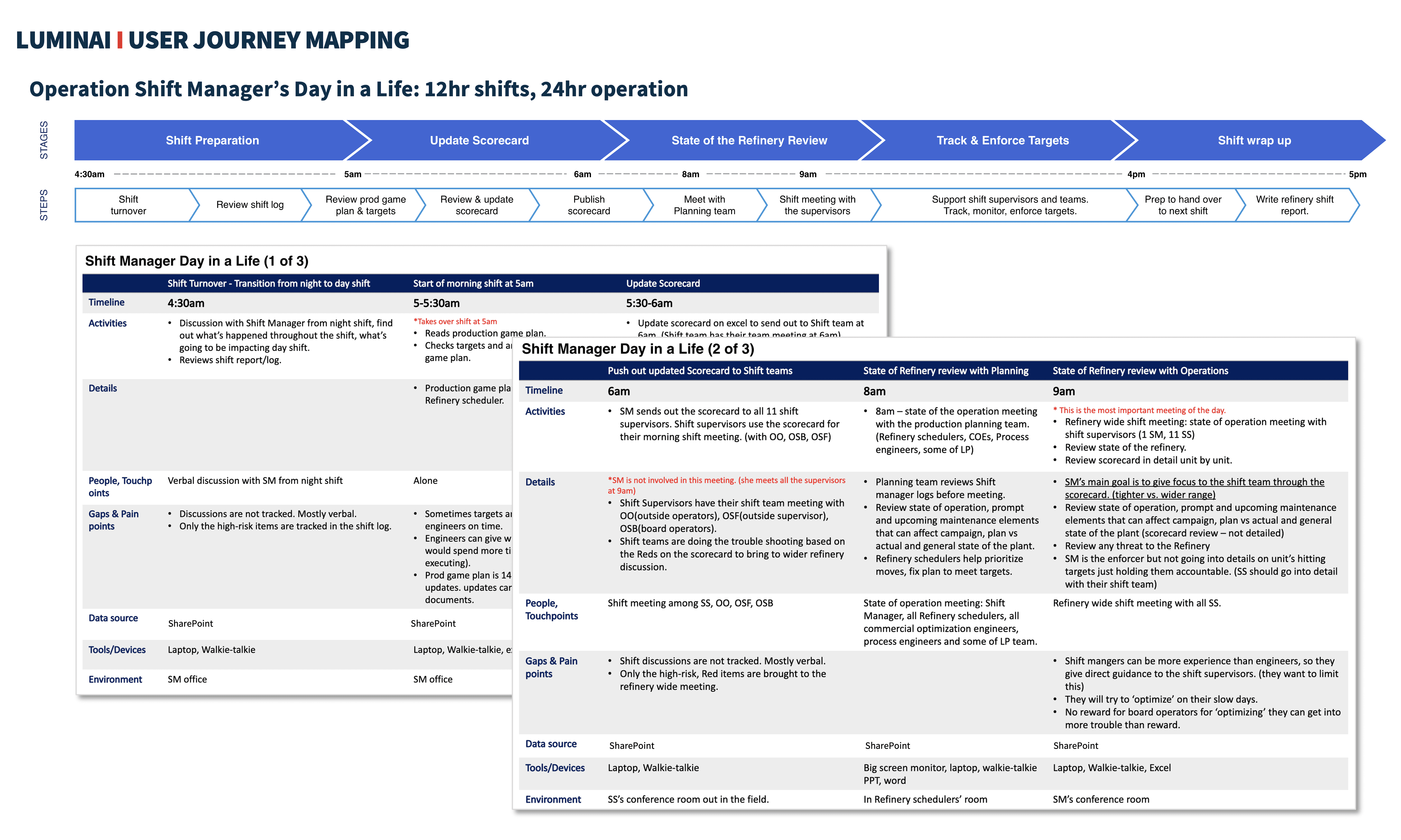
Research Methodology
5-day on-site observation shadowing shift managers through 12-hour shifts, attending planning meetings, and documenting workflows and information flow.
17 interviews across four roles: Shift Managers (4), Process Engineers (5), Planners (4), and Refinery Schedulers (4).
Core Focus
Understanding the planning-to-operations handoff and real-time decision-making by examining:
Information needs during live operations
Engineer escalation triggers
Trade-off decision processes
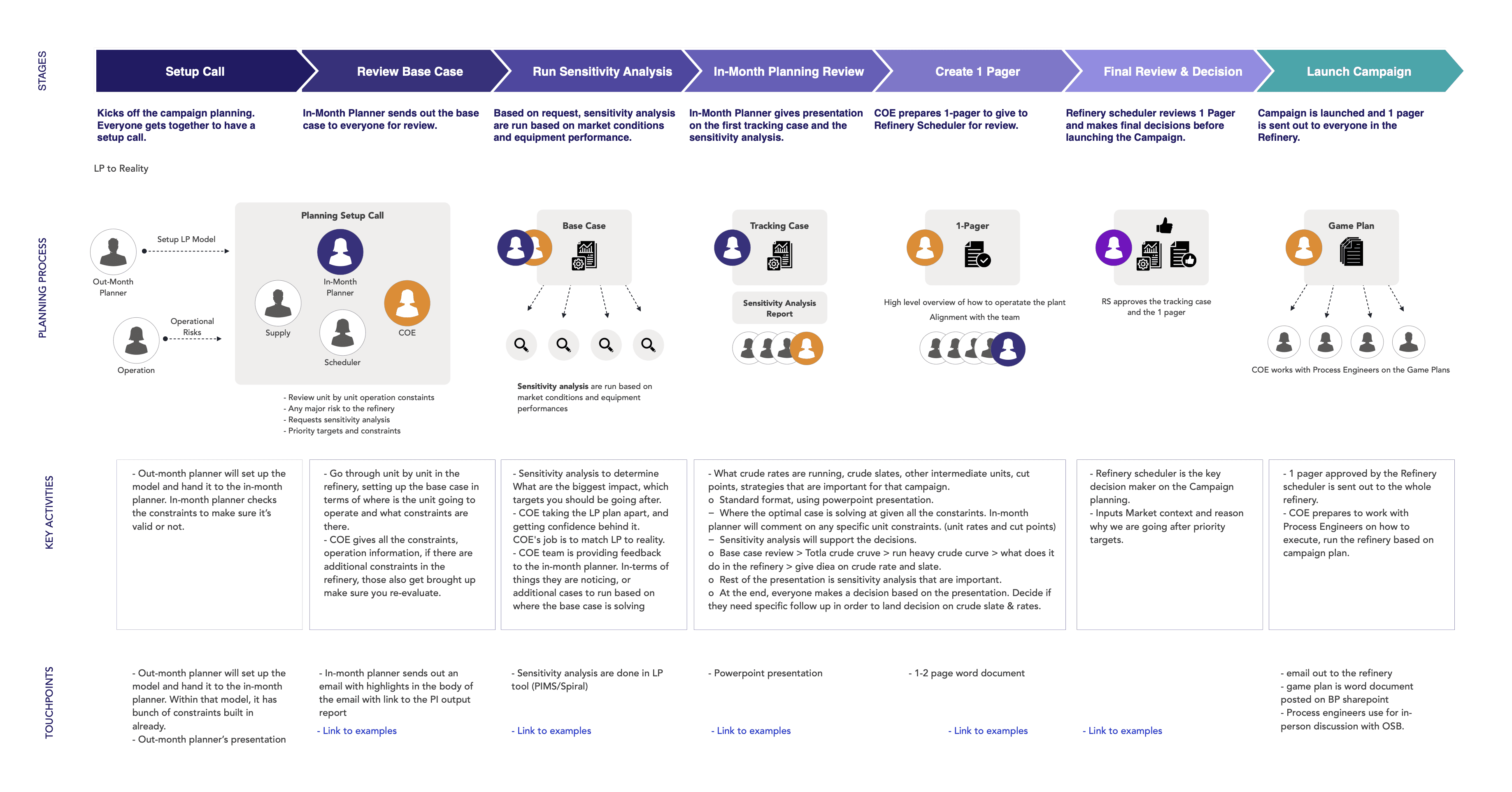
Key Insights from Research
Insight 1: The Game Plan Gets Lost Engineers create detailed 17-page game plan documents, but shift managers had them buried under other papers or couldn't reference them quickly during operations. The planning intelligence never effectively reached operations.
Insight 2: Real-Time is Everything Sam told me: "I need a visual game plan that I can check quickly to understand where we are at." Current Excel scorecards were printed hours ago and immediately outdated.
Insight 3: Context Drives Action When objectives went off-target, shift managers needed to know:
Is this urgent or can it wait?
What specific action should I take?
Why does this matter to our overall goals?
Without this context, they defaulted to calling engineers—creating bottlenecks and delays.
Design Solution: Three Connected Views
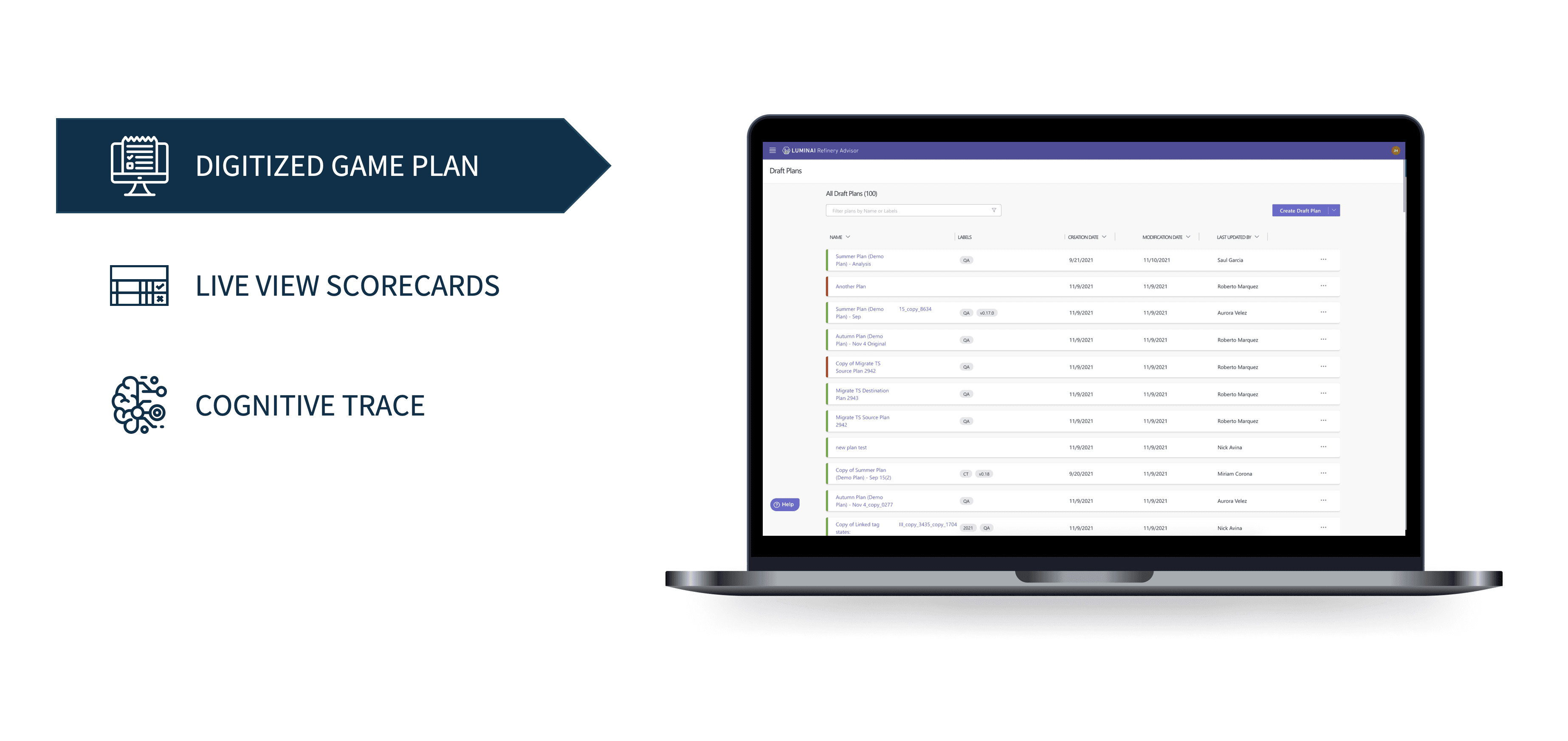
Solution 1: Digitized Plan (For Engineers)
Transformed the 17-page Word document into a structured, digital planning interface where engineers could:
Build game plans directly in the system
Define objectives, targets, and mitigation strategies
Link operational logic to campaign goals
Create guidance that flows directly to operators
Design Decision: By digitizing planning, we created a single source of truth that could be surfaced real-time to shift managers.
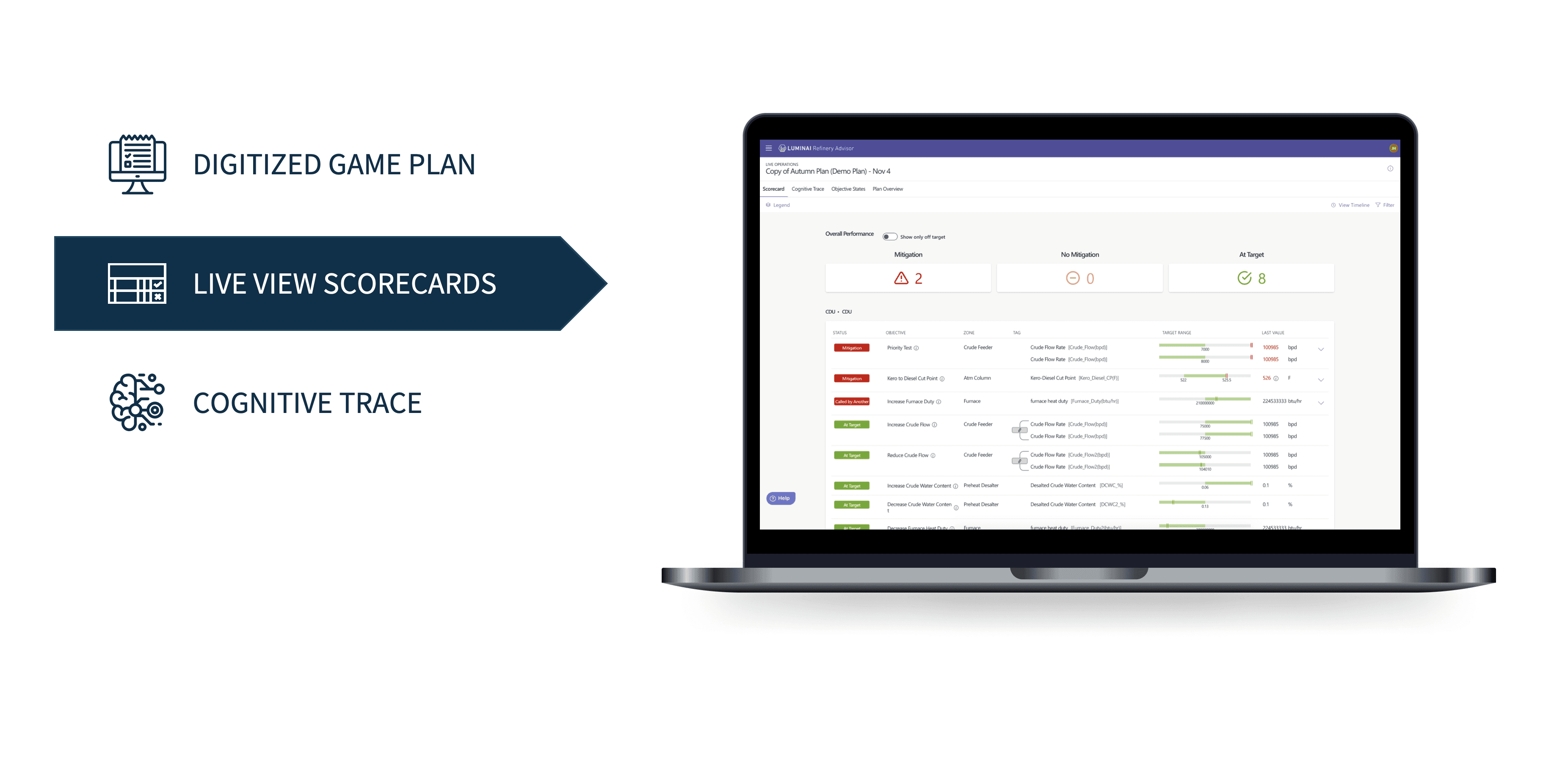
Solution 2: Live View Scorecards (For Shift Managers - Sam's Primary Interface)
This became the heart of the experience for Sam. I designed scorecards that provide:
At-a-Glance Status
Color-coded performance indicators (red/yellow/green)
Real-time updates every minute
Performance metrics vs. targets
Trend indicators
Prioritized Attention
Mitigation status highlighted
Urgency levels clearly marked
Number of objectives requiring attention
Embedded Guidance
What to do when objectives go off-target
Expected outcomes of actions
Links to detailed procedures
Design Decision: Instead of requiring shift managers to search through documentation, I brought the guidance directly to the problem. When Sam sees red indicators, the system tells him exactly what the engineer recommended as a mitigation.
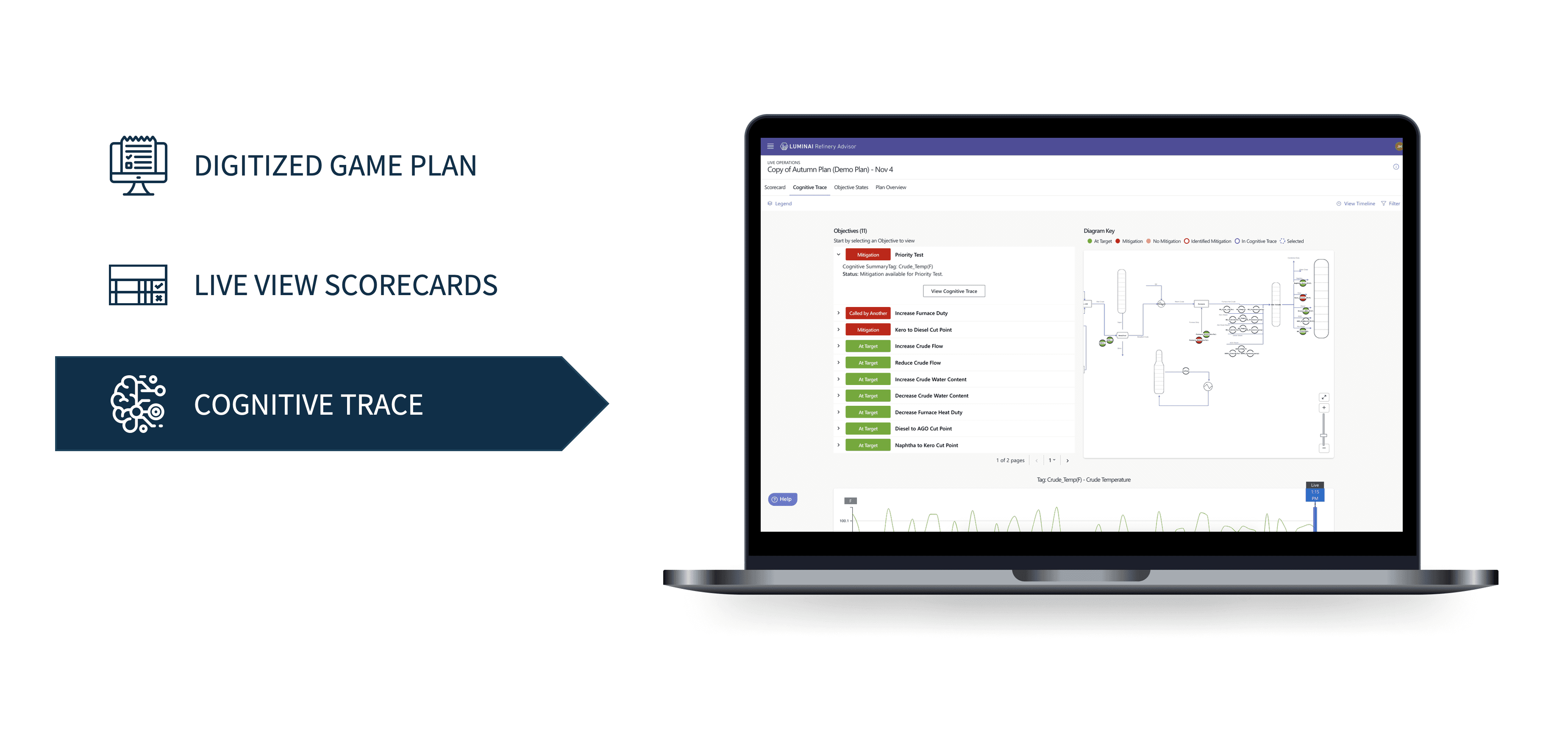
Solution 3: Cognitive Trace (For Understanding AI Reasoning)
To build trust in the AI advisor, I designed transparency into the system:
Visual process diagrams showing refinery unit relationships
Explanation of why certain objectives are linked
Historical pattern recognition
Confidence levels in recommendations
Design Decision: In high-stakes environments, operators need to understand WHY the AI recommends actions, not just WHAT to do.
Conclusion
The LuminAI Refinery Advisor transformed how shift managers like Sam make operational decisions. By combining deep user research with thoughtful product design, we created a system that doesn't just present data—it provides actionable intelligence exactly when and how operators need it.
This project reinforced my belief that the best design comes from truly understanding users in their context, then relentlessly advocating for their needs throughout the product development process.